
Astragalus
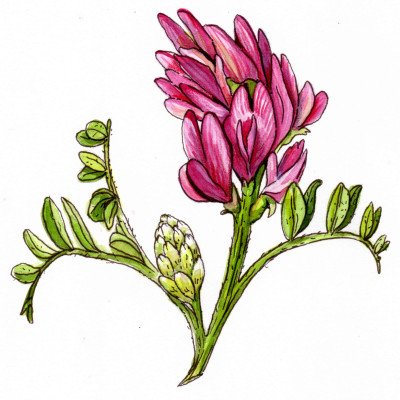
Scientific Name
Astragalus membranaceus
Common Name
Huang chi, huang qi, milk vetch, Radix astragali
Clinical Summary
Astragalus root is widely used in Traditional Chinese medicine for its tonifying properties. Studies done in China suggest that astragalus, when used with angelica, has reno protective effect- Meaning protecting the kidney against harmful effects, such as of a drug or other chemical.
This being a technical article from Memorial Sloan-Kettering Cancer Center- Please contact me for an explanation - The easily explainable layman's terms are in Green print.
In addition, astragalus decreases the proteinuria associated with idiopathic membranous nephropathy and exhibits natriuretic action .
Astragalus may also suppress airway hyper reactivity associated with allergic asthma in vivo . It also increases M-cholinergic receptor density in senile rats , which suggests that it may have a role in combating senility.
Astragalus extract acts as a nerve-growth promoting factor in vitro and in vivo , and alleviates obstructive uropathy in mice in combination Angelica sinensis and standard care .
An herbal formula containing astragalus as a major ingredient has been shown to reduce fatigue in athletes .
Astragalus extracts inhibit tumor growth , delay chemical-induced hepatocarcinogenesis in rats , and have antiangiogenic property .
In vitro, animal, and anecdotal human data show that astragalus reduces immune suppression, a side effect of chemotherapy , and may also enhance the effects of platinum-based chemotherapy.
Conclusions from a meta-analysis suggest benefits of astragalus-based treatments for hepatocellular cancers, but data need to be evaluated in larger, well designed trials.
Improvement in quality of life was reported following use of an injectable form of astragalus with vinorelbine and cisplatin in patients with advanced non-small cell lung cancer (NSCLC) .
However, it is not known whether orally administered astragalus will exert the same effect.
Patients taking immunosuppressants (e.g., tacrolimus or cyclosporin) should not take this supplement.
Patients taking immunosuppressants (e.g., tacrolimus or cyclosporin) should not take this supplement.
Purported Uses
- Cardiovascular disease
- Chemotherapy side effects
- Common cold
- Diabetes
- HIV and AIDS
- Immunostimulation
- Microbial infection
- Strength and stamina
Constituents
- Triperpenoid saponins (cycloastragenol, astragaloside I to VIII, and cyclocanthoside)
- Cycloartane triterpene
- Polysaccharide
- Isoflavonoids
- Amino acids
Mechanism of Action
Astragalus works by stimulating several factors of the immune system. The polysaccharides potentiate the immune-mediated antitumor activity of interleukin-2 in vitro , improve the responses of lymphocytes from normal subjects and cancer patients, enhance the natural killer (NK) cell activity of normal subjects, and potentiate the activity of monocytes ,
increasing phagocytosis perhaps by regulating tumor necrosis factor (TNF) production .
The saponins potentiate NK cell activity and restore steroid-inhibited NK cell activity in vitro. They also increase phagocytosis and demonstrate hepatoprotective effects on chemically-induced liver injury in vitro and in vivo .
Chinese studies suggest that astragalus, when used with angelica, has renal protective effects by mediating gene expression.
increasing phagocytosis perhaps by regulating tumor necrosis factor (TNF) production .
The saponins potentiate NK cell activity and restore steroid-inhibited NK cell activity in vitro. They also increase phagocytosis and demonstrate hepatoprotective effects on chemically-induced liver injury in vitro and in vivo .
Chinese studies suggest that astragalus, when used with angelica, has renal protective effects by mediating gene expression.
Astragalus increases M-cholinergic receptor density in senile rats, suggesting that astragalus may have a role in combating brain senility .
An herbal formula containing astragalus can reduce fatigue in athletes by increasing uptake and utility of oxygen .
Adverse Reactions
Adverse effects have not been reported.
Herb-Drug Interactions
- Immunosuppresants: Astragalus may antagonize the effects of immunosuppressants such as tacrolimus and cyclosporine.
- Aldesleukin: Concomitant treatment with astragalus has resulted in a 10-fold potentiation of tumor-cidal activity with decreased side effects.
- Cyclophosphamide: Astragalus may decrease immunosuppression following treatment.
Literature Summary and Critique
Most of the clinical trials on astragalus were conducted in China using multiple-herbal formulas that contain astragalus as the major component. The selection of herbs is based on Traditional Chinese Medicine.
This analysis included 45 randomized controlled trials of oral TCM preparations for hepatocellular cancers and involved 3,236 patients. Survival, tumor response, and performance scores were examined. The authors report that products containing ginseng, astragalus and mylabris had a larger treatment effect (OR 1.34, 95% CI, 1.04-1.71, P = 0.01) than the pooled broad estimate.
They observed a similar pattern for astragalus-based treatments (OR 1.35, 95% CI, 1.001-1.80. P = 0.048). Astragalus and other TCM products may be effective against hepatocellular cancers. However, the methodology of trials was poor; all the studies were conducted in China and publication bias in favor of only positive reports is likely. The results should be evaluated in well designed trials.
This study included 136 patients with confirmed non-small-cell lung cancer (NSCLS). Patients were randomized to receive vinorelbine and cisplatin (VC) or VC combined with astragalus polysaccharide APS (VC-APS). Following 3 cycles of treatment, significant differences were observed in overall quality of life (P = 0.003), physical function (P = 0.01), fatigue (P < 0.001), nausea and vomiting (P < 0.001), pain (P = 0.007), and loss of appetite (P = 0.023) between the two groups. Median survival time was 10.7 and 10.2 months (P = 0.76) in VC-APS arm and VC arm, with 1-year survival rates of 35.3 and 32.4% (P = 0.717), respectively.
Astragalus polysaccharide injection combined with vinorelbine and cisplatin may help improve quality of life in patients with NSCLC. However, there was no significant improvement in tumor response or survival rates.
This analysis sought to determine whether Chinese herbal medicine containing Astragalus increases the effectiveness of platinum-based chemotherapy for advanced non-small-cell-lung cancer. Thirty-four randomized studies involving 2,815 patients were analyzed. Results suggest that when used in conjunction with platinum-based chemotherapy, Astragalus-based medicine improved survival, tumor response, performance status, and reduced chemotherapy toxicity when compared with chemotherapy alone.
However, the low quality of the studies analysed is a drawback and the results are therefore, not conclusive. Well-designed studies are warranted.
Four clinical trials were included in this review to assess the effectiveness of Astragalus (Huangqi) compounds on the quality of life, side effects of chemotherapy, and on adverse effects in colorectal cancer patients.
A decoction of Huangqi compounds was used in combination with chemotherapy in three studies, whereas the fourth study compared Huangqi compounds with two other Chinese herbal formulas. Patients who were given Huangqi compounds experienced a reduction in nausea and vomiting along with a decrease in the rate of leucopenia and an increase in CD3, CD4 and CD8 subsets of T-lymphocytes when compared to those treated with chemotherapy alone in the three studies or with other Chinese formulas in the fourth study.
Use of Chinese herbal medicine along with chemotherapy appears promising for patients with colorectal cancer; however, a major limitation of this review is that it includes only four studies and the studies are of poor quality. Further properly designed trials are needed to confirm these observations.

No comments:
Post a Comment